

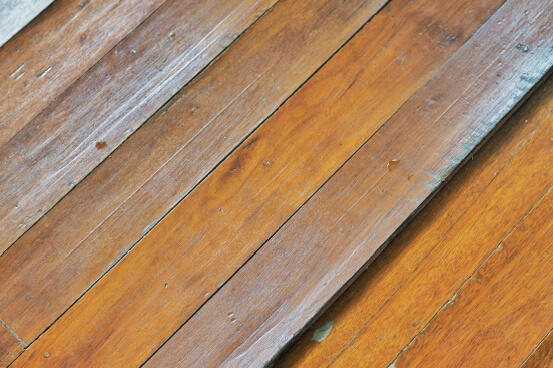
Understanding the Causes of Hardwood Floor Damage
03/21/2023
Hardwood flooring has always been much appreciated for its natural beauty, durability, ease of maintaining and cleaning, and relative softness compared to harder tiling materials such as porcelain and ceramic. However, these floors can also get damaged when subjected to adverse conditions. Hardwood floor damage can take place as a gradual process of over a short period of time. If the underlying causes are not addressed in a timely manner, your flooring and its sub-structure may suffer serious damage and require replacement at a later stage.
Before discussing the factors that may cause damage to hardwood floors, it is important to note that hardwood floors come in many different variations. In addition to different sizes and shapes, different wood species come with a wide range of unique characteristics including different grain patterns, different colours, and degree of hardness. For example, because of its strength and uniform light colour, maple wood is a great choice for gymnasium flooring. On the other hand, walnut and mahogany are highly preferred choices for office floors because of their rich deep colours. In addition to the use of different wood species, hardwood floors also differ in terms of their laying pattern. It can be simple strips and planks to parquet and herringbone patterns.
Causes of Damage:
Though hardwood floor is extremely durable and sustainable, it is not beyond damage. Exposure to moisture is one of the leading causes of hardwood damage. Moreover, wood flooring often experiences issues resulting from inappropriate installation practices. Excessive moisture exposure caused by an overly humid environment or a leak can lead to warping or buckling of the floor.
Other common hardwood flooring related issues generally result from poor finishing, installation, or preparation. Please remember that all hardwood floors must be acclimated to the environment where it will be installed. This is an elaborate process that may take even weeks to complete. Moreover, hardwood floors should always be installed over a sub flooring material using appropriate adhesives, fasteners, or both. If the preparation and attachment are inadequate, you may have to deal with a squeaky and uneven floor.
Finally, in order to avoid failed finishes, you must focus on careful preparation of the flooring. Improper finishing techniques can very easily lead to problems such as waviness, discolouration, peeling, bubbles, and other related conditions. If your finishing technique is incorrect, you may also experience side bonding, which causes cracking of the floor and abnormally large gaps.
Floor Damage Investigation:
If you observe any signs of improper installation and finishing practices in your hardwood flooring, contact an expert without any delay whatsoever. Inspection of the floor will involve taking measurements and photographs as well as the use of tools such as thermograph, moisture meters, etc. If you suspect a water leak, inspection will also include determining the cause and source of the leak. Based on the specific property and damage observed, the repair recommendations should be tailored.
If you have more questions related to your hardwood floor, please feel free to get in touch with us at Enoak.