

Understanding the Pros and Cons of Stained Hardwood Floors
06/21/2024
Hardwood floor installation is undoubtedly an excellent decision for your home. Stained hardwood floors can enhance the overall look of a room by adding depth and warmth. However, at the same time, it is worth remembering that the preparation, treatment, and finishing of hardwood floors is an elaborate process and this applies strongly to staining. If the staining process is not properly executed, there can be major unwanted results. Therefore, before you proceed with staining, it is important that clearly understand the pros and cons of the staining process.
What is staining?
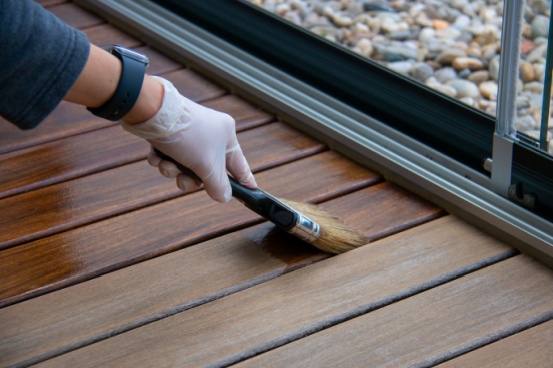
We often confuse staining with finishing, but these two processes are very different. A finish is the final coat that protects the hardwood. On the other hand, staining adds colours to the floor, often changing the colour of the wood entirely. If you go wrong with your selection of colour, you may have to re-sand the entire floor to rectify the mistake. Therefore, one must be very careful while choosing the stain. Your selection should ideally depend on factors such as the type of wood, the overall design, and the amount of light in the room.
Pros of Staining
When it is done right, staining can provide a stunning appearance to the room. Discussed below are some specific benefits you can expect.
- Most natural wood species are light in colour, but dark wood is extremely popular nowadays and staining is the best way to achieve this look.
- Even if you are unable to afford the most expensive varieties of hardwood, staining can be a great option to achieve something similar. For example, when a rich cherry stain is added to a lighter wood, it is possible to create the dimension and depth of rich cherry.
- Achieving elaborate designs like a lattice or herringbone can be difficult with lighter wood. However, staining gives us the freedom to achieve the pattern of our choice.
- The best part about staining is its ability to accentuate the grain, creating a cosier and warmer feel.
Cons of Staining
As briefly mentioned earlier, staining does have certain drawbacks that should be taken into consideration.
- If the right process is not followed, staining can leave a series of gauges and scratches in the wood. When a stain is applied, its pigment seeps into the fine marks and makes them darker and more prominent. This can make the floor murky.
- Tight-grained wood species such as pine, birch, and maple are resistant to staining as they have very few openings for the stain to settle.
- Unlike paints, it is not possible to darken or correct stains by applying more layers. There is a limit to the amount of stain that type of wood can absorb. When this limit is reached, the application of more stain results in it rising back up to the wood surface, a phenomenon commonly referred to as “bleedback”.
- Finally, staining is an extremely time-consuming process.
If you want to find out more about hardwood floor installation at your home or office, please contact us at Enoak.